
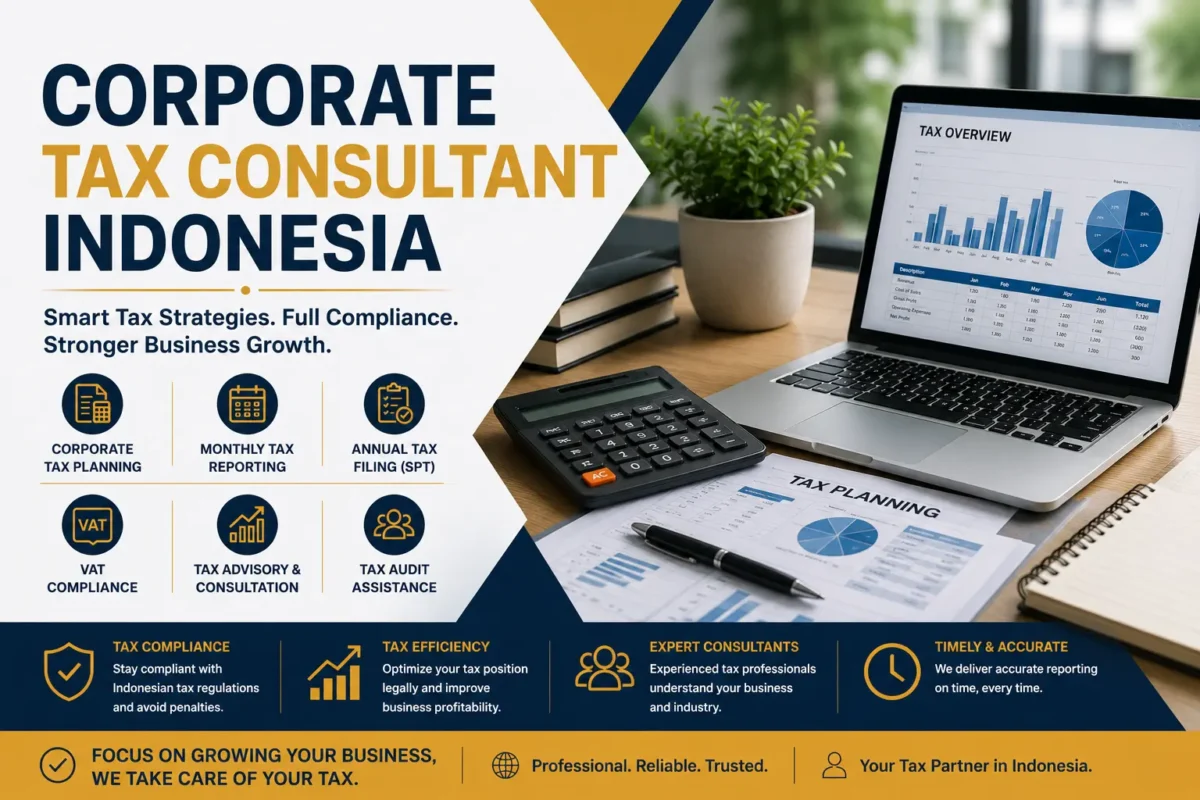
A corporate tax consultant can help a business organize tax data, prepare calculations and filings, review documentation, and plan compliant transactions. However, no adviser can guarantee that a company is fully compliant, that a tax audit will have a particular outcome, or that every proposed tax position will be accepted.
This guide explains the scope of a Corporate Tax Consultant Indonesia, the boundary between preparation and formal taxpayer representation, and the evidence a company should maintain.
Current rules for tax consultants and representatives
Indonesia changed the regulatory framework in 2026. Minister of Finance Regulation No. 55 of 2026 regulates tax consultants and other parties acting as taxpayer representatives. Minister of Finance Regulation No. 44 of 2026 addresses the requirements for acting as a representative in tax matters and the procedures for exercising a taxpayer’s rights and obligations.
Because the proper authorization depends on the person, the taxpayer, and the action being taken, a company should verify the representative’s status and the required power of attorney before formal interaction with the tax authority. Preparing schedules in the background is not automatically the same as acting as the taxpayer’s representative.
What corporate tax support may cover
A written scope may include:
- reviewing tax registrations and the company’s filing calendar;
- preparing calculations and supporting schedules for periodic taxes;
- VAT and withholding-tax data reconciliation;
- preparing the annual corporate income tax return and reconciliation schedules;
- reviewing tax treatment for documented transactions;
- identifying missing evidence or inconsistent accounting treatment;
- preparing documents and issue lists for a tax audit; and
- coordinating formal submissions or meetings through an authorized person where required.
Jakarta Legal ID’s Financial & Tax Consulting service may assist with agreed administrative, accounting, and coordination work. The engagement should identify who prepares, reviews, approves, submits, and formally represents the taxpayer.
Tax planning is not a promise of tax savings
Compliant tax planning starts with the real transaction, commercial purpose, contracts, invoices, accounting records, and applicable law. It should not be presented as a guaranteed reduction in tax. A position that lacks supporting facts or documentation can create additional tax, interest, penalties, and dispute costs.
Before implementing a material or unusual transaction, management should ask for:
- the relevant factual assumptions;
- the legal basis and effective date;
- alternative treatments considered;
- documentation required to support the position; and
- the risks if the tax authority takes a different view.
Monthly and annual compliance workflow
- Map obligations: identify taxes, filing frequency, deadlines, and responsible personnel.
- Close the books: reconcile sales, purchases, payroll, banks, withholding documents, and VAT data.
- Prepare calculations: document classifications, rates, adjustments, and assumptions.
- Internal approval: an authorized company representative reviews the filing and supporting evidence.
- Submission and payment: complete these through the proper channel and authorized person.
- Archive evidence: retain the filing, receipt, payment proof, calculations, and source records in an accessible audit trail.
See also the broader Tax Compliance Indonesia guide. Filing frequency and treatment depend on the company’s registrations, transactions, and status; a generic checklist is not a substitute for reviewing the taxpayer’s actual profile.
Support during a tax audit
Tax-audit support may include organizing notices, reconciling returns to the ledger, creating a document index, preparing factual explanations, tracking deadlines, and coordinating responses. Formal representation or communication on behalf of the taxpayer must follow the applicable authorization rules.
A responsible engagement should not promise to eliminate an assessment or guarantee a result. The outcome is determined by the facts, evidence, law, procedure, and the authority’s review.
Documents commonly reviewed
- tax registrations and taxpayer profile;
- general ledger and trial balance;
- periodic and annual tax returns;
- invoices, withholding documents, and payment receipts;
- contracts and proof of delivery or performance;
- payroll and employee data;
- fixed-asset and inventory records;
- bank statements and reconciliations;
- related-party and cross-border transaction records; and
- prior correspondence, audits, objections, or rulings where relevant.
How to appoint a corporate tax consultant
Before appointment, confirm:
- the consultant’s identity, licence or registration where applicable, and permitted scope;
- whether the work is advice, filing preparation, submission, or formal representation;
- the exact entities, periods, taxes, and deliverables covered;
- who signs the power of attorney and who may communicate with the authority;
- professional fees, third-party costs, and exclusions;
- data-security and document-retention arrangements; and
- how disagreements, errors, or late source records will be handled.
Frequently asked questions
Can a tax consultant guarantee compliance or a successful audit?
No. The consultant can apply procedures and provide advice, but the result depends on complete facts, management actions, evidence, applicable law, and the tax authority’s assessment.
Is preparing a return the same as representing the taxpayer?
No. Preparation can be an internal support activity. Acting before the tax authority on the taxpayer’s behalf is a distinct role and must satisfy the applicable authorization requirements.
Can Jakarta Legal ID help with a tax audit?
Jakarta Legal ID can discuss document preparation, reconciliation, issue tracking, and coordination. If formal representation is required, the authorized representative and scope must be confirmed for the specific matter.
Does every company need the same monthly tax package?
No. Obligations vary according to registration, transactions, industry, workforce, VAT status, and other facts.
This article is general information, not a tax opinion or guarantee. Tax rules and administrative systems change; confirm the current requirements and the company’s facts before filing or appointing a representative.