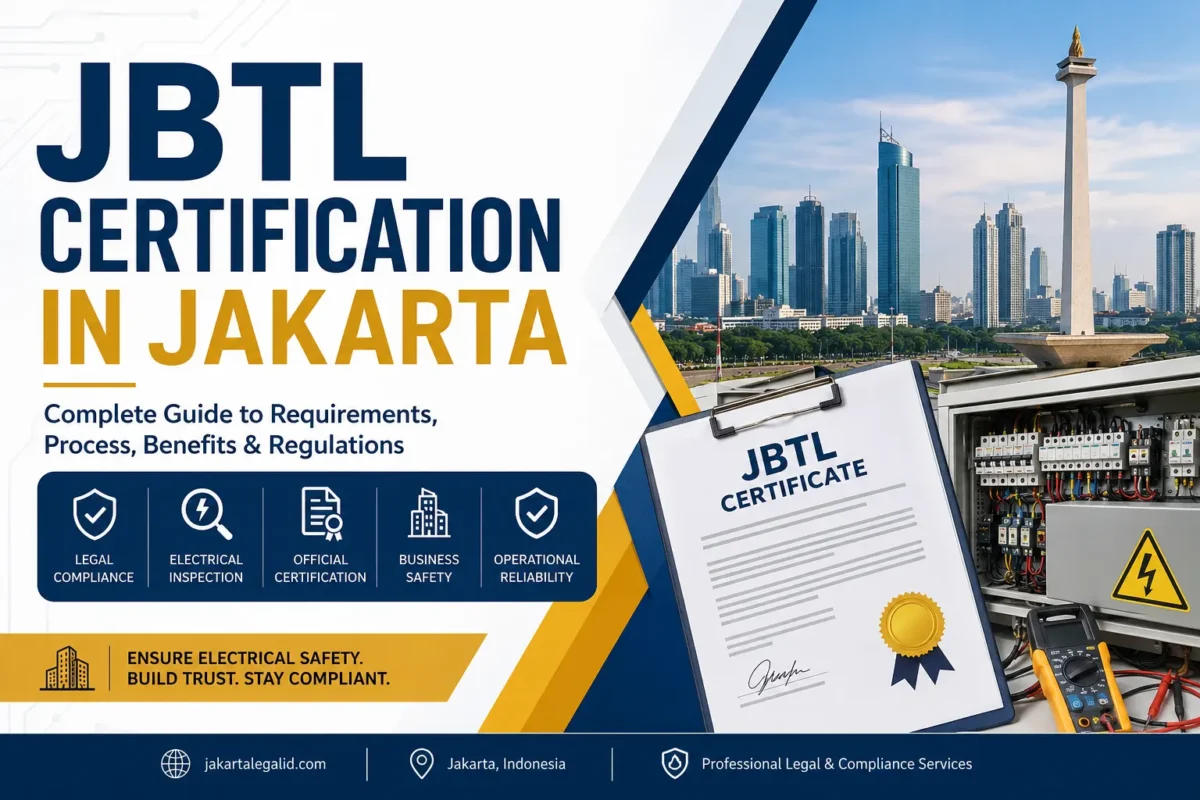
Businesses operating commercial, industrial, residential, and public facilities in Indonesia must ensure that their electrical installations comply with applicable safety regulations. One of the essential compliance documents is JBTL Certification, which demonstrates that an electrical installation has been inspected and meets the required technical and safety standards.
If you are planning to construct a new building, renovate an existing facility, or apply for electrical utility connections, understanding the JBTL Certification in Jakarta process can help avoid delays, reduce compliance risks, and improve operational safety.
This guide explains what JBTL Certification is, who needs it, the legal framework, application requirements, inspection process, and the benefits of working with an experienced consultant.
What Is JBTL Certification in Jakarta ?
JBTL (Jaringan Beserta Instalasi Tenaga Listrik) Certification is an official certification related to electrical installation systems. It verifies that an electrical installation complies with Indonesian technical standards and safety regulations before being operated.
The certification generally involves technical inspections and testing conducted by authorized inspection bodies. Once the installation satisfies all applicable requirements, the necessary certification documents can be issued to support legal operation and electrical service applications.
JBTL Certification helps ensure that:
- Electrical installations are safe for occupants.
- Equipment operates according to technical standards.
- Fire and electrical hazards are minimized.
- Buildings comply with Indonesian electrical regulations.
- Businesses meet regulatory obligations before operation.
Why Is JBTL Certification in Jakarta Important?
Electrical systems are among the most critical infrastructure components in any building. Poor installation practices can result in:
- Electrical fires
- Equipment damage
- Business interruption
- Worker injuries
- Regulatory penalties
- Delays in obtaining operational permits
Obtaining JBTL Certification in Jakarta demonstrates that the electrical installation has undergone professional inspection and meets recognized technical standards.
For property owners, developers, contractors, and facility managers, certification also provides greater confidence in the long-term reliability of the electrical system.
Who Needs JBTL Certification in Jakarta?
JBTL Certification in Jakarta may be required for various types of electrical installations, including:
Commercial Buildings
- Office buildings
- Shopping centers
- Hotels
- Hospitals
- Restaurants
- Retail outlets
Industrial Facilities
- Manufacturing plants
- Warehouses
- Processing facilities
- Logistics centers
Residential Developments
- Apartment buildings
- Housing complexes
- High-rise residences
Public Infrastructure
- Government buildings
- Educational institutions
- Transportation facilities
- Public service facilities
The specific requirements depend on the building type, electrical capacity, applicable regulations, and project scope.
Regulatory Framework
Electrical installation compliance in Indonesia is governed by various regulations and technical standards designed to promote public safety and reliable electrical infrastructure.
Relevant regulatory references may include:
- Indonesian electrical safety regulations.
- National electrical installation standards.
- Ministry regulations related to electrical installations.
- Applicable Indonesian National Standards (SNI).
- Technical requirements issued by relevant authorities and licensed inspection institutions.
Because regulations may be updated periodically, applicants should always verify the latest requirements before beginning the certification process.
Read More: Construction SBU Certification Jakarta: Complete Guide for Contractors and Construction Companies
Benefits of JBTL Certification in Jakarta
Obtaining JBTL Certification in Jakarta provides advantages beyond regulatory compliance.
Improved Electrical Safety
Certified installations are inspected to reduce risks associated with faulty wiring, overloaded systems, and improper installation practices.
Regulatory Compliance
Certification helps businesses demonstrate compliance with Indonesian electrical safety requirements.
Operational Reliability
Well-inspected electrical systems generally experience fewer failures, reducing maintenance costs and operational disruptions.
Better Risk Management
Proper certification can support broader risk management initiatives by ensuring that electrical systems meet recognized technical standards.
Increased Stakeholder Confidence
Investors, tenants, insurance providers, and business partners often value documented compliance with recognized safety standards.
General Requirements for JBTL Certification in Jakarta
Although requirements may vary depending on the project, applicants are commonly asked to prepare documentation such as:
- Building information
- Company identification documents
- Electrical installation drawings
- Single-line diagrams
- Electrical load calculations
- Equipment specifications
- Installation reports
- Testing documentation
- Supporting engineering documents
- Other technical information requested by the inspection body
Preparing complete documentation before submission can significantly reduce processing time.
Read More:Â Business Certification Indonesia: Complete Guide to SBU, LPJK, and Business Certification Services
JBTL Certification Process in Jakarta
Although every project has its own technical characteristics, the JBTL Certification in Jakarta process generally follows several key stages. Understanding each step helps property owners, contractors, and project managers prepare the necessary documents and reduce potential delays.
1. Initial Consultation and Project Assessment
The process typically begins with a review of the building or facility. During this stage, the consultant evaluates:
- Building type and function
- Electrical capacity
- Installation scope
- Existing documentation
- Compliance status
- Applicable technical standards
An early assessment helps identify missing documents or technical issues before the formal application is submitted.
2. Document Preparation
Applicants generally prepare supporting documentation such as:
- Company profile or owner information
- Building data
- Electrical single-line diagram
- Electrical layout drawings
- Load calculation reports
- Equipment specifications
- Installation documentation
- Technical reports
- Supporting engineering documents
Complete documentation allows inspectors to review the installation more efficiently.
3. Technical Inspection
An authorized inspection body conducts a comprehensive evaluation of the electrical installation.
The inspection may include:
- Distribution panels
- Switchboards
- Transformer systems
- Earthing (grounding) system
- Protection devices
- Cable installation
- Lighting circuits
- Emergency electrical systems
- Electrical safety devices
The objective is to verify that the installation complies with applicable technical and safety requirements.
4. Electrical Testing
After the physical inspection, various tests may be performed depending on the project scope.
Typical testing includes:
- Insulation resistance
- Ground resistance
- Continuity testing
- Protection system verification
- Voltage measurements
- Functional testing
- Safety verification
These tests help ensure the electrical installation performs safely under normal operating conditions.
5. Correction of Findings (If Required)
If inspectors identify non-conformities, corrective actions must usually be completed before certification can proceed.
Common corrective actions include:
- Replacing unsuitable electrical components
- Updating electrical drawings
- Improving grounding systems
- Correcting cable installations
- Revising protection systems
Once corrections are completed, additional inspections may be required.
6. Certification Issuance
After all requirements have been satisfied and the inspection results are approved, the relevant certification documents can be issued according to the applicable procedures.
How Long Does JBTL Certification in Jakarta Take?
Processing time depends on several factors, including:
- Building size
- Electrical system complexity
- Documentation completeness
- Inspection schedule
- Number of corrective actions required
- Regulatory review process
Projects with complete documentation and well-prepared installations generally experience a smoother certification process.
Common Challenges During JBTL Certification
Many applications encounter delays because of avoidable issues.
Incomplete Documentation
Missing engineering drawings or technical calculations are among the most common reasons for delayed processing.
Installation Does Not Match Drawings
Inspectors often compare the installed electrical system with the submitted documentation. Any discrepancies may require revisions.
Non-Standard Equipment
Using equipment that does not comply with applicable standards can result in additional corrective work.
Poor Grounding System
An inadequate grounding system is a frequent finding during electrical inspections because it directly affects electrical safety.
Lack of Preventive Testing
Many issues could be identified before inspection through internal testing performed by qualified professionals.
Why Work with a Professional JBTL Consultant?
Managing the certification process internally can be challenging, particularly for organizations unfamiliar with Indonesian electrical regulations.
A professional consultant can assist with:
- Reviewing project readiness
- Preparing technical documentation
- Coordinating inspections
- Identifying compliance gaps
- Supporting corrective actions
- Communicating with relevant stakeholders
- Helping reduce unnecessary delays
Working with experienced professionals also allows project teams to focus on construction or business operations while maintaining regulatory compliance.
Frequently Asked Questions (FAQ) – JBTL Certification in Jakarta
What is JBTL Certification in Jakarta?
JBTL Certification in Jakarta verifies that an electrical installation complies with applicable Indonesian technical and safety standards.
Is JBTL Certification mandatory?
Requirements depend on the type of installation, electrical capacity, and applicable regulations. Businesses should verify current regulatory obligations before commencing operations.
Who can apply for JBTL Certification in Jakarta?
Property owners, developers, contractors, industrial companies, commercial building operators, and other eligible parties responsible for electrical installations may apply.
What documents are commonly required?
Typical documents include electrical drawings, load calculations, technical reports, equipment specifications, company information, and supporting engineering documentation.
How long does the certification process take?
The timeline varies according to project complexity, document completeness, inspection scheduling, and whether corrective actions are required.
Can existing buildings obtain JBTL Certification?
Yes. Existing facilities may undergo inspection and, if necessary, complete corrective actions before certification can be issued.
What happens if inspection findings are identified?
The applicant is generally required to correct the identified issues before the certification process can continue.
Does certification improve electrical safety?
Yes. The inspection and testing process helps identify potential risks, contributing to safer and more reliable electrical installations.
Why is professional assistance recommended?
Professional consultants can help prepare documentation, coordinate inspections, identify compliance gaps, and improve process efficiency.
Where can businesses obtain assistance for JBTL Certification in Jakarta?
Businesses can work with experienced compliance and licensing consultants familiar with Indonesian electrical regulations and certification procedures.
Conclusion
Obtaining JBTL Certification in Jakarta is an important step in demonstrating that an electrical installation has been assessed against applicable technical and safety requirements. Proper preparation, complete documentation, and timely inspections can help streamline the certification process while reducing the likelihood of delays.
Whether you are developing a commercial building, managing an industrial facility, or upgrading an existing electrical installation, understanding the certification requirements supports regulatory compliance, operational reliability, and long-term safety.
For organizations seeking guidance throughout the process, working with an experienced consultant can simplify documentation, coordinate inspections, and help ensure that each stage of the application is managed efficiently.
If your company requires assistance with JBTL Certification in Jakarta, the team at Jakarta Legal ID can help guide you through the certification process—from document preparation and regulatory consultation to coordination with the relevant authorities and inspection bodies.
Contact Jakarta Legal ID to discuss your project requirements and receive professional support tailored to your business.
Authoritative References
- Ministry of Energy and Mineral Resources (ESDM)
- Directorate General of Electricity (Ditjen Ketenagalistrikan)
- Indonesian National Standards (SNI)
- General Requirements for Electrical Installations (PUIL)
- Relevant Indonesian laws and regulations governing electrical installations and occupational safety