Jakarta Legal ID | Insights, Regulations & Compliance
 Business Setup
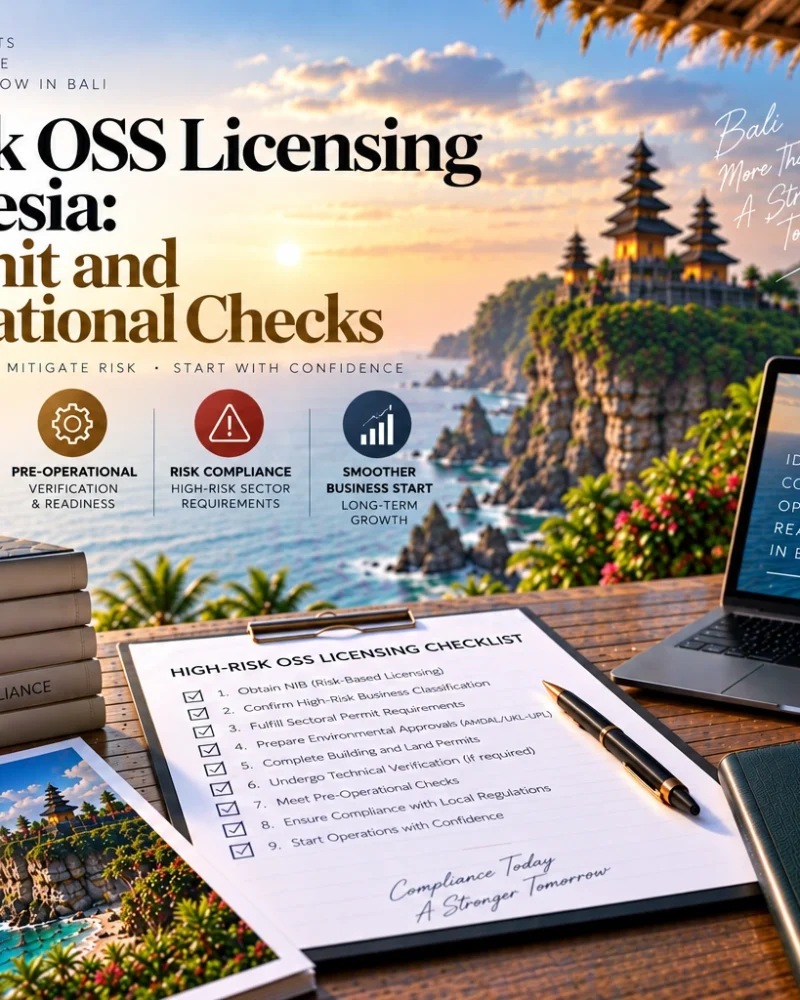
For high risk OSS licensing Indonesia, an NIB alone is not the full operational licence. The current framework requires NIB + Permit, and the NIB issued during the ordinary high-risk pathway provides only limited legality for preparation until the applicable Permit requirements are fulfilled. The official BKPM legal database lists Government Regulation No. 28 of […]
Read More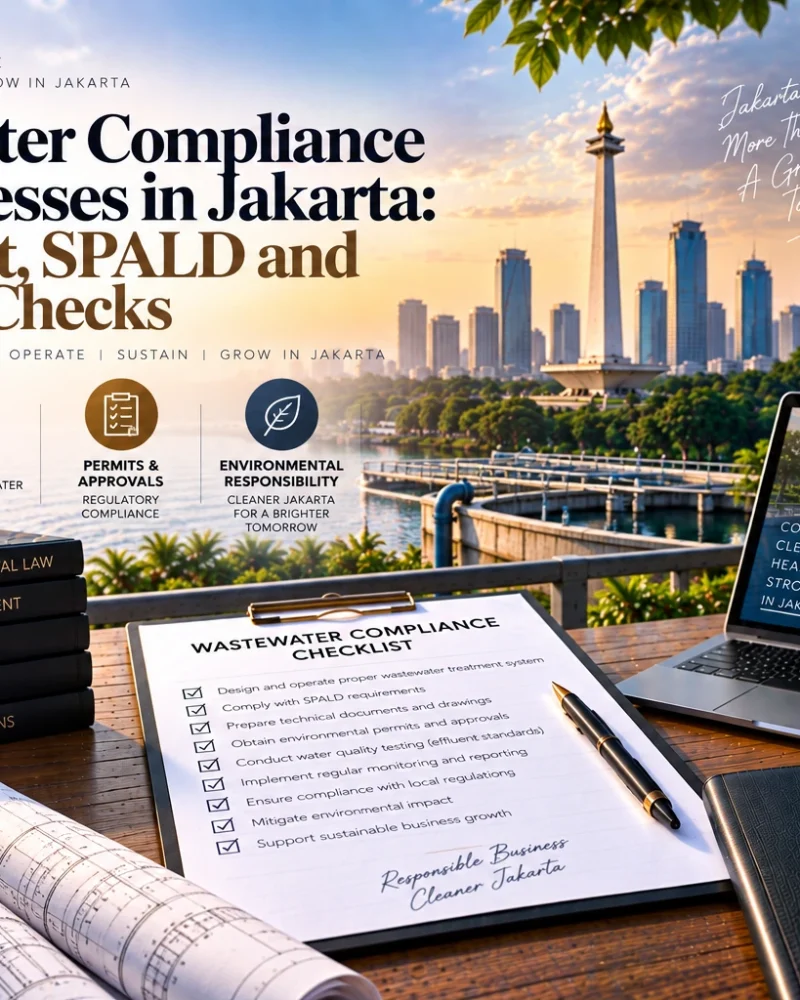 Business Setup
Wastewater Compliance Business Jakarta business starts with one question: what wastewater does the site actually generate? Office toilets and washrooms, restaurant sinks, industrial process water and manufacturing effluent should not automatically be treated as one regulatory category. Indonesia’s broader environmental compliance framework continues to include Government Regulation No. 22 of 2021, which the official legislation […]
Read More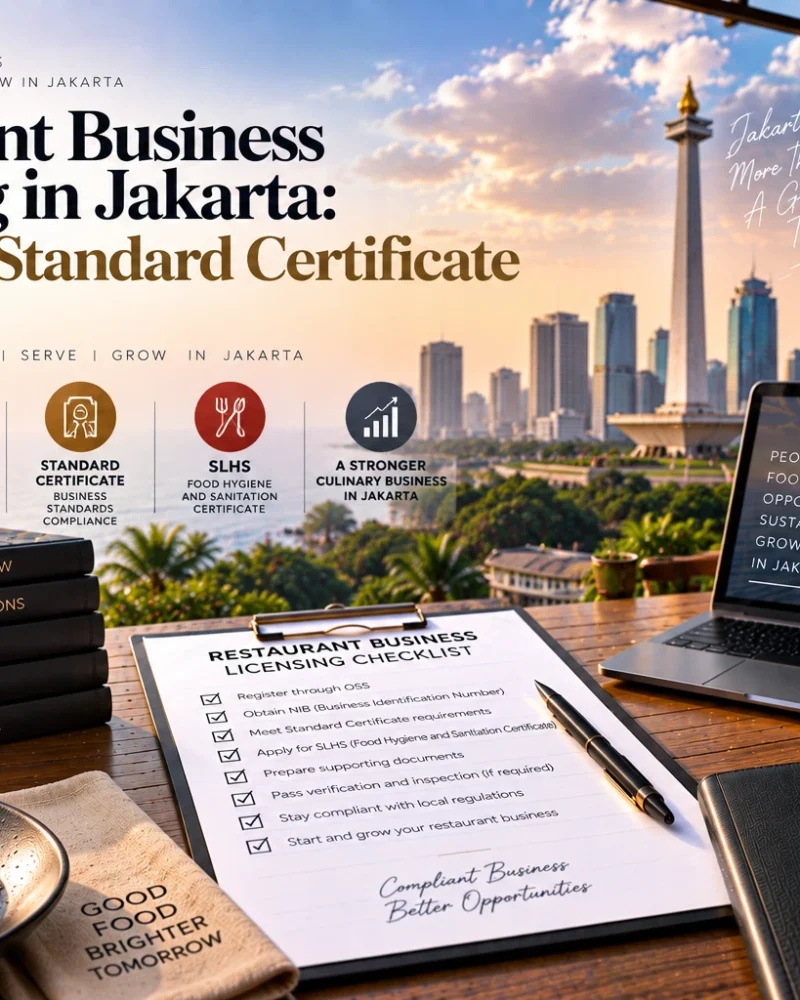 Business Setup
Opening a restaurant in Jakarta in 2026 is not simply a matter of obtaining an NIB. The licensing path depends on the restaurant’s current business classification, business scale, OSS risk level, Standard Certificate status, hygiene-sanitation requirements and any supporting licences triggered by what the restaurant actually sells or does. Indonesia’s current overarching risk-based licensing framework […]
Read More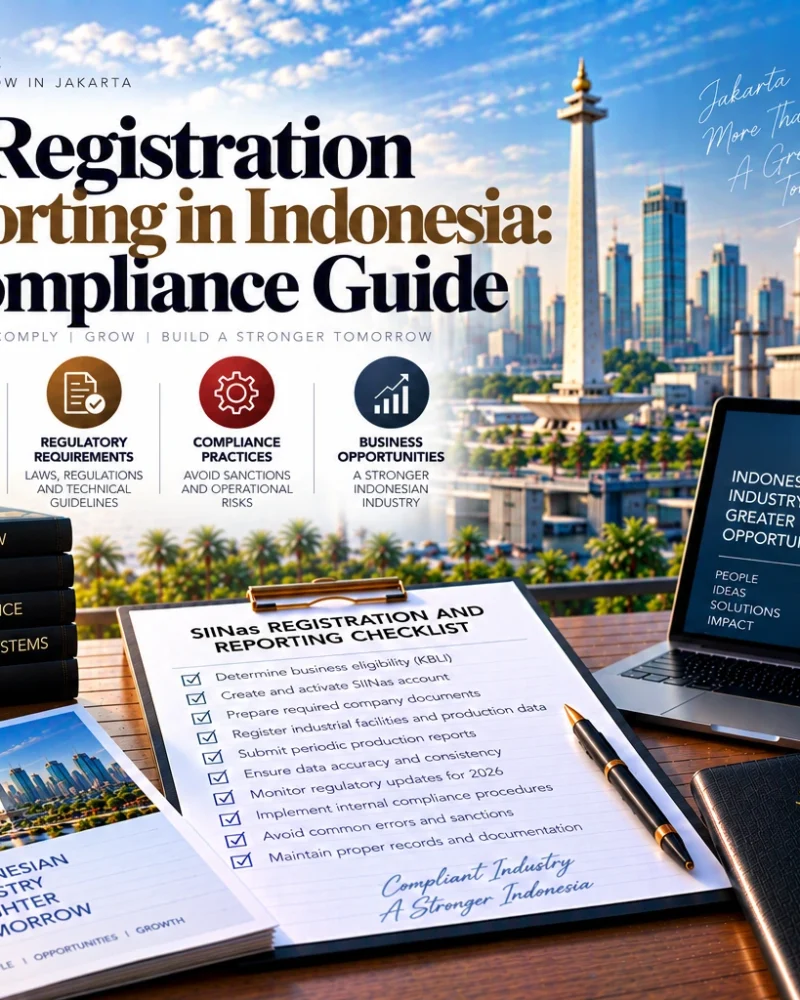 Industrial Licenses
SIINas registration reporting is a recurring compliance process for industrial companies in Indonesia, not merely a one-time account setup. A company first needs access to the Sistem Informasi Industri Nasional, or SIINas, and then needs to keep its company information and periodic Industrial Data aligned with its actual business operations. Under Minister of Industry Regulation […]
Read More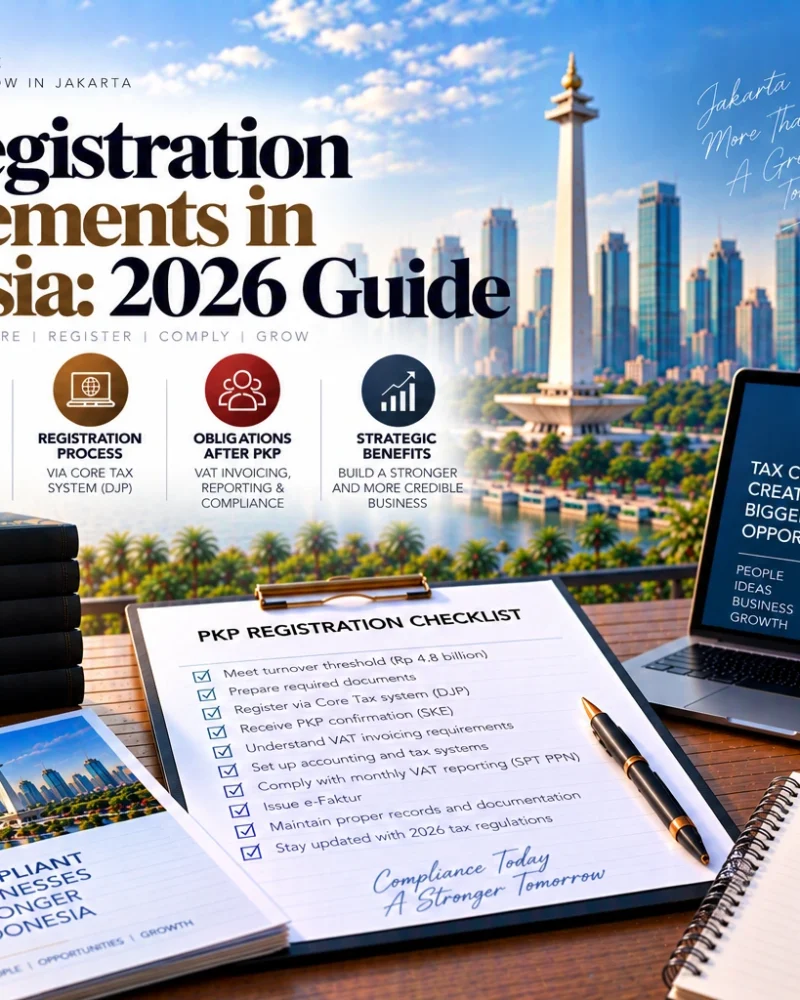 Financial & Tax Consulting
PKP registration in Indonesia determines when an entrepreneur becomes a Pengusaha Kena Pajak and enters the VAT collection, payment and reporting framework. The first question is therefore not simply which form to file, but whether registration is mandatory, voluntary, or not yet required. For businesses reviewing PKP registration requirements Indonesia, the current framework is particularly […]
Read More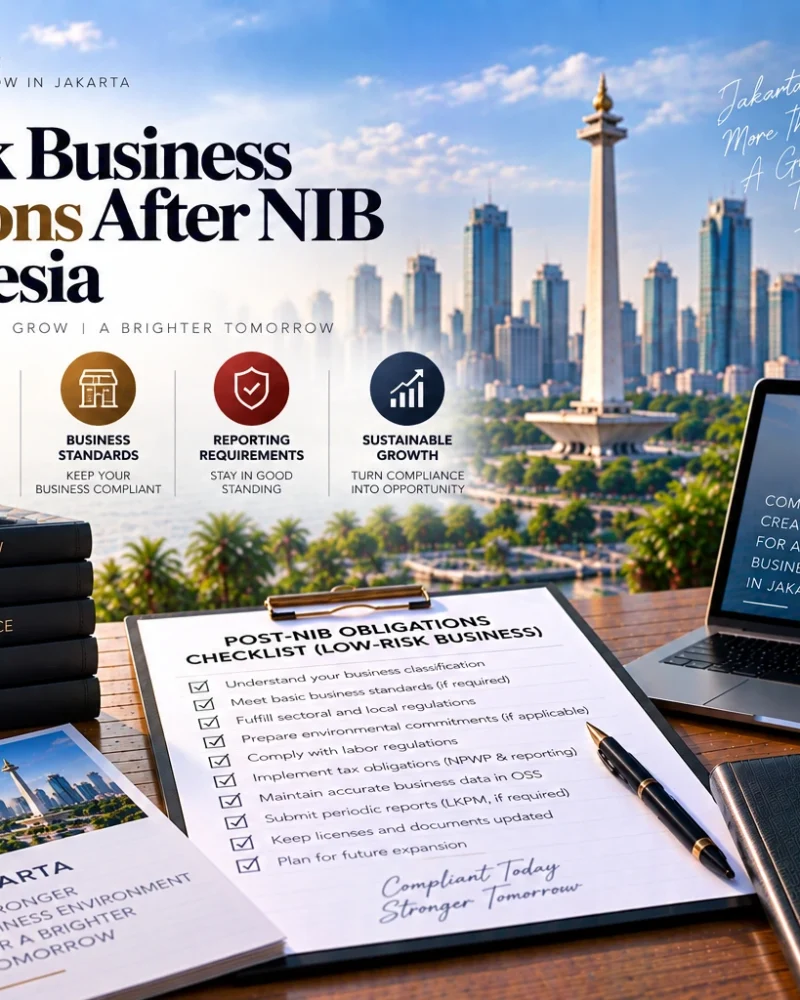 Business Setup
A low-risk business in Indonesia can generally begin operating once its NIB has been issued, but NIB-only licensing does not mean the company has no further compliance obligations. The business must continue to follow the commitments, sector obligations, reporting duties and supporting approvals that apply to its actual activity. Indonesia’s current risk-based licensing framework is […]
Read More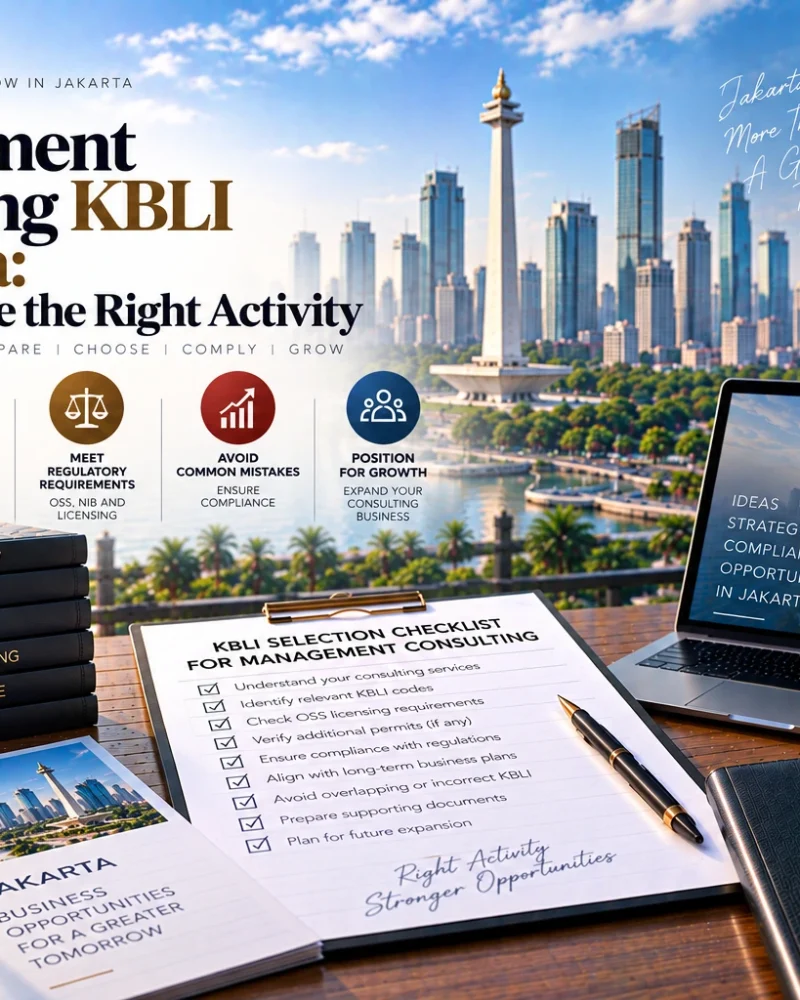 Business Setup
Choosing a management consulting KBLI Indonesia should start with the service delivered to the client, not the word ‘consultant’ in the company name. Strategy advice, computer-system design, tax consulting, engineering advice and executive recruitment can all be described commercially as consulting, but they do not belong to the same classification. The current legal basis is […]
Read More Business Setup
Setting up a consulting company in Jakarta starts with defining exactly what advice or professional service the company will sell. Indonesia does not treat every business using the word ‘consulting’ as one licensing category, so selecting the company structure before defining the service can create the wrong KBLI and the wrong OSS path. Indonesia’s current […]
Read More Business Setup
A KBLI 2025 code does not by itself tell an investor the permitted foreign ownership percentage. The current analysis requires at least three layers: identify the exact KBLI 2025 activity, reconcile it with the investment-business-field framework, and check whether a restriction applies to the specific activity rather than merely to a similar code number. Under […]
Read More Business Setup
Receiving an NIB does not automatically mean every licence needed for the business is complete. PB UMKU is a separate supporting-legality layer that can still apply where a product, facility, operational process or other business activity requires additional authorization at the operational or commercial stage. Indonesia’s current overarching risk-based licensing framework is Government Regulation No. […]
Read More