Jakarta Legal ID | Insights, Regulations & Compliance
 Business Setup
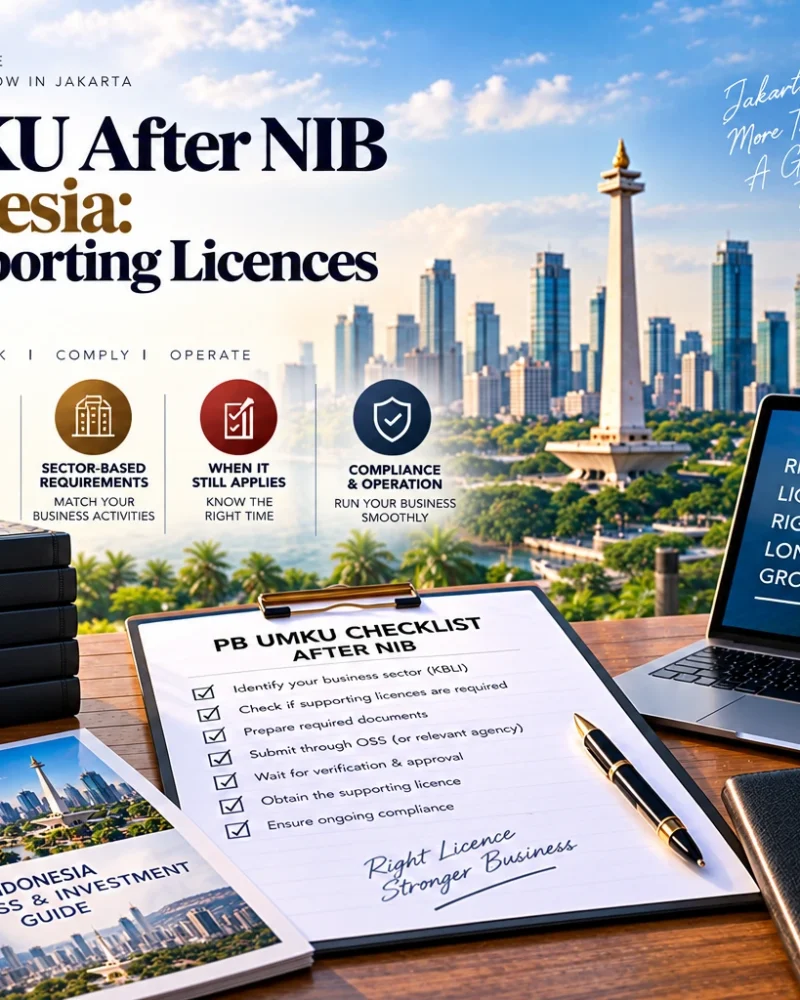
Receiving an NIB does not automatically mean every licence needed for the business is complete. PB UMKU is a separate supporting-legality layer that can still apply where a product, facility, operational process or other business activity requires additional authorization at the operational or commercial stage. Indonesia’s current overarching risk-based licensing framework is Government Regulation No. […]
Read More Business Setup
Reducing the capital of an Indonesian PT is not simply the reverse of a capital increase. It is a formal amendment process that can affect shareholders and creditors, so the Company Law requires shareholder approval, public notice to creditors, an objection period and Ministerial approval before the reduction is completed. The underlying corporate framework remains […]
Read More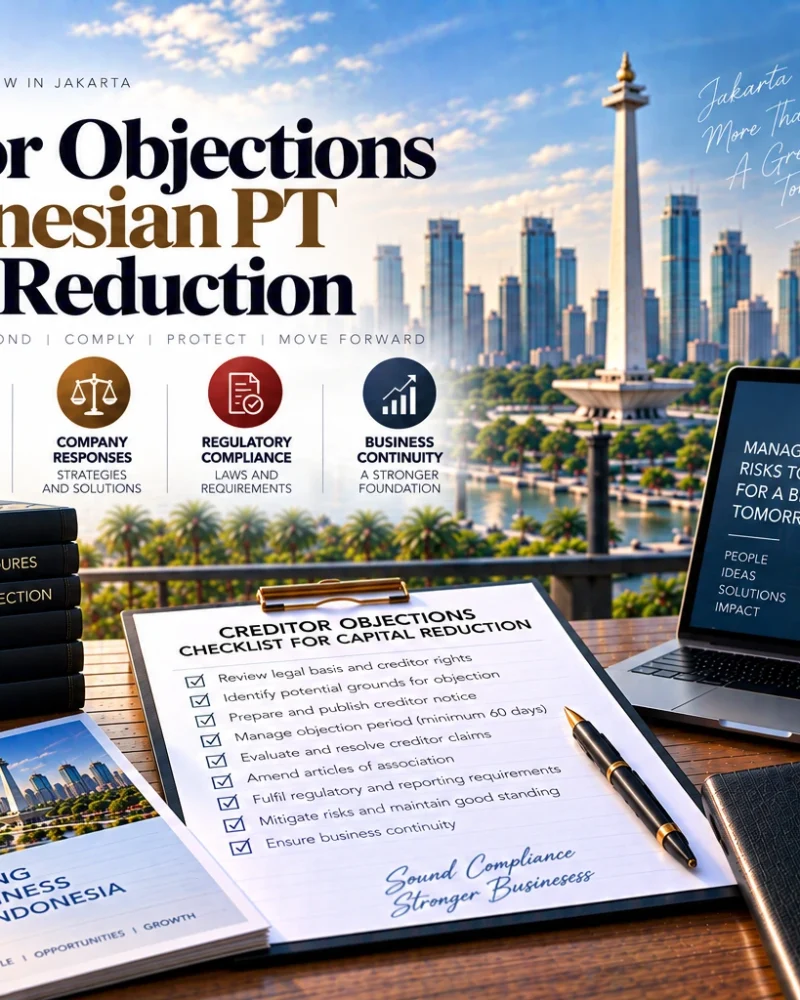 Business Setup
A creditor can formally object to an Indonesian PT capital reduction, and that objection can prevent the company from obtaining Ministry approval until the issue is cleared. The core statutory sequence is announcement → 60-day objection period → company response → settlement or court pathway → Ministry approval. The statutory framework remains Law No. 40 […]
Read More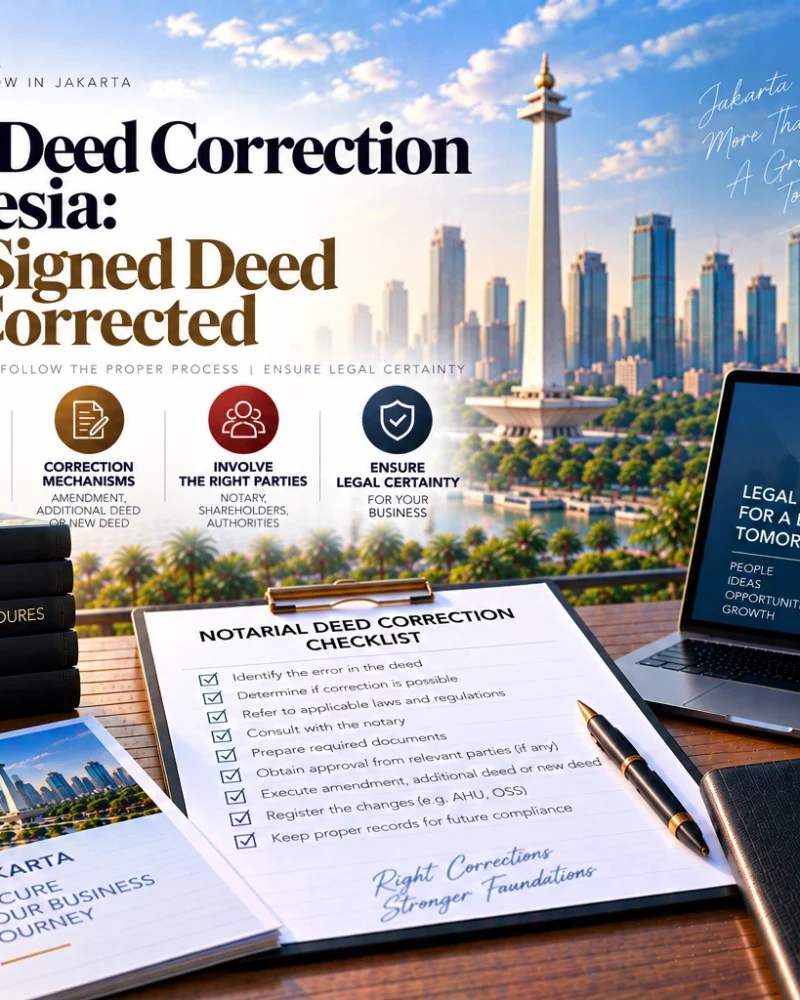 Notary Services
A signed Indonesian notarial deed can be corrected in a limited situation: Article 51 permits a notary to correct writing and typing errors in the signed Minuta Akta. The correction is not an informal replacement of the deed and should not automatically be used to change the commercial substance of the parties’ transaction. The operative […]
Read More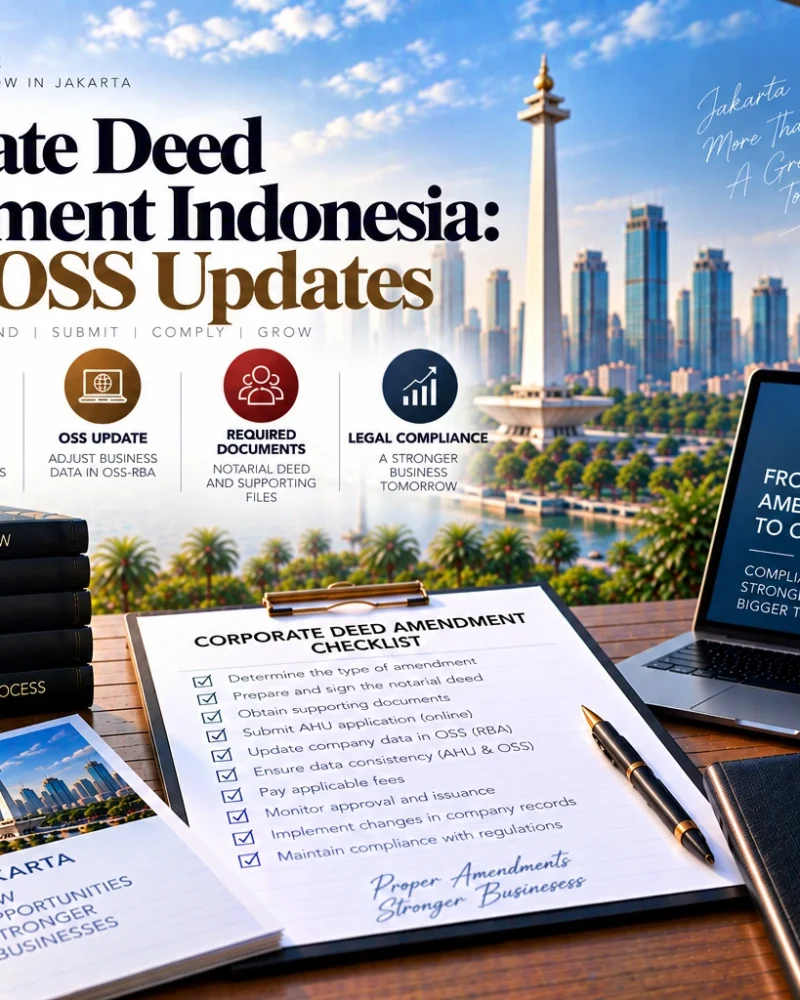 Notary Services
A corporate deed amendment Indonesia can trigger two separate government update layers after the notarial work: the corporate record in AHU/Ministry systems and, where the changed information is reflected in business licensing, the OSS profile or licensing data. These steps are connected, but they are not the same filing. Under Article 21 of Law No. […]
Read More Business Setup
A PT PMA can generally hold Hak Guna Bangunan (HGB) because the company is an Indonesian legal entity, even when some or all of its shareholders are foreign. The important distinction is that the PT PMA holds the HGB; the foreign shareholders own shares in the company rather than owning the Indonesian land title personally. […]
Read More Business Setup
Indonesia’s current OSS risk classification determines the form of Business Licensing attached to a business activity. In practical terms, the four levels are low risk, medium-low risk, medium-high risk and high risk, with the licensing output escalating from an NIB to Standard Certificates and, at the high-risk level, a Permit. The official BKPM legal database […]
Read More Business Setup
After an Indonesian share acquisition, do not automatically replace the target company’s reported beneficial owner simply because its direct shareholder changed. The correct post-closing process is to trace the new ownership and control structure to the relevant natural person or persons, re-test the Indonesian beneficial-owner criteria, and update AHU only where the reportable information has […]
Read More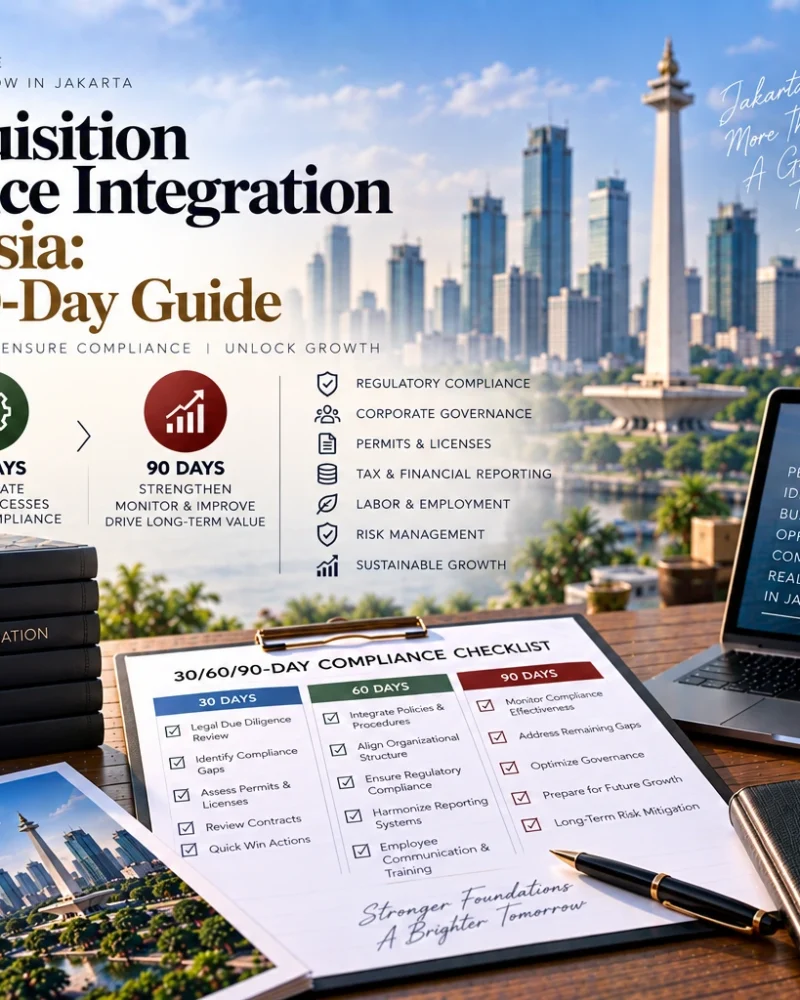 Business Setup
Post Acquisition Compliance Integration Indonesia: Post-acquisition integration in Indonesia should not begin with the assumption that every government registration must be replaced. Start by identifying what legally changed at closing, then update each corporate, licensing, tax and workforce record that no longer matches the target company’s actual facts. Under Article 125 of Law No. 40 […]
Read More Business Setup
Choosing a Jakarta company address is more than selecting a prestigious building or the cheapest virtual-office package. The address must work for company registration, document delivery, OSS licensing, spatial compatibility and the way the business will actually operate. Under Article 5 of Law No. 40 of 2007 on Limited Liability Companies, a company must have […]
Read More