
Jakarta Legal ID | Insights, Regulations & Compliance
 Business Certification (SBU)
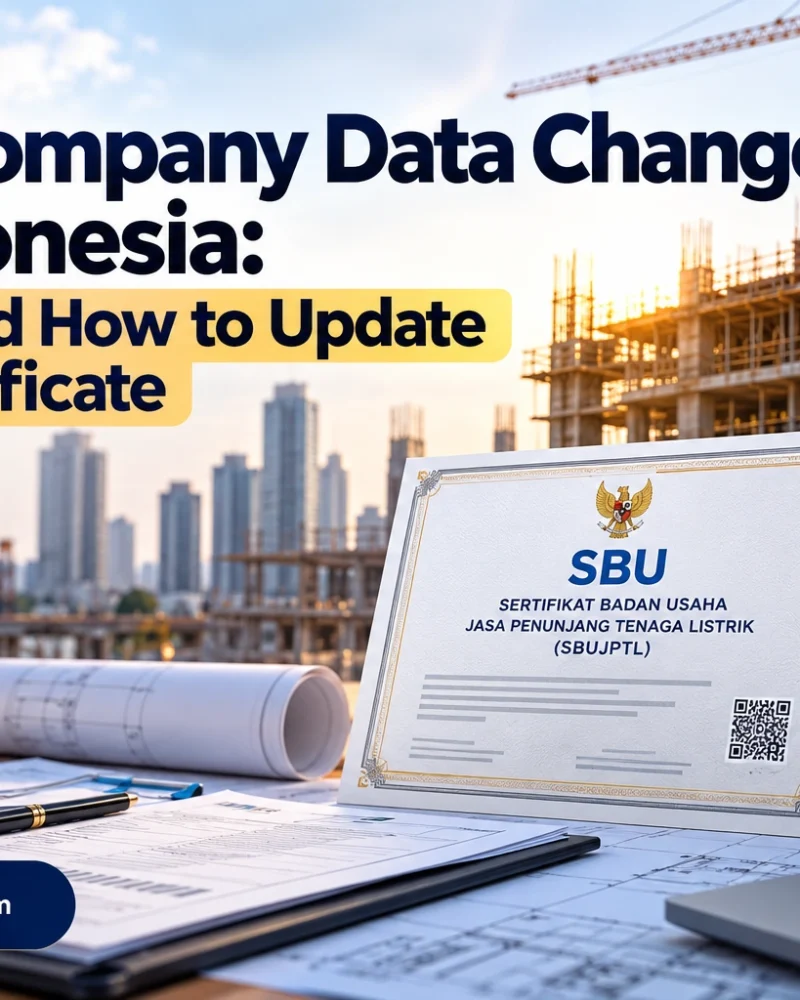
A change in company information does not automatically mean that the company must submit an entirely new construction SBU application. The first question is whether the changed fact affects the company identity, responsible personnel, qualification, subclassification, or another item relied on by the SBU record. As of 3 October 2026, Permen PU No. 6 of […]
Read More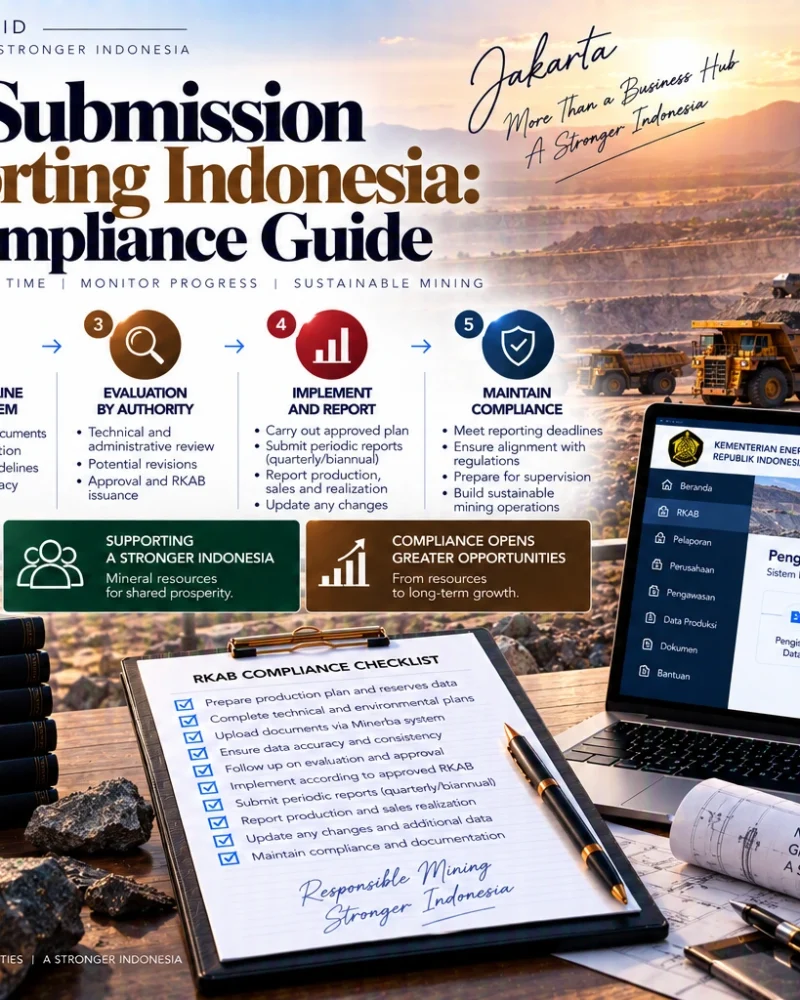 Mining Licenses
For mining operators, RKAB submission reporting Indonesia is now an annual planning and continuing reporting cycle rather than a multi-year filing exercise. Relevant mining permit holders must prepare an RKAB for each year, obtain approval through the designated system and then report actual mining activities against that approved plan. The current framework starts with Minister […]
Read More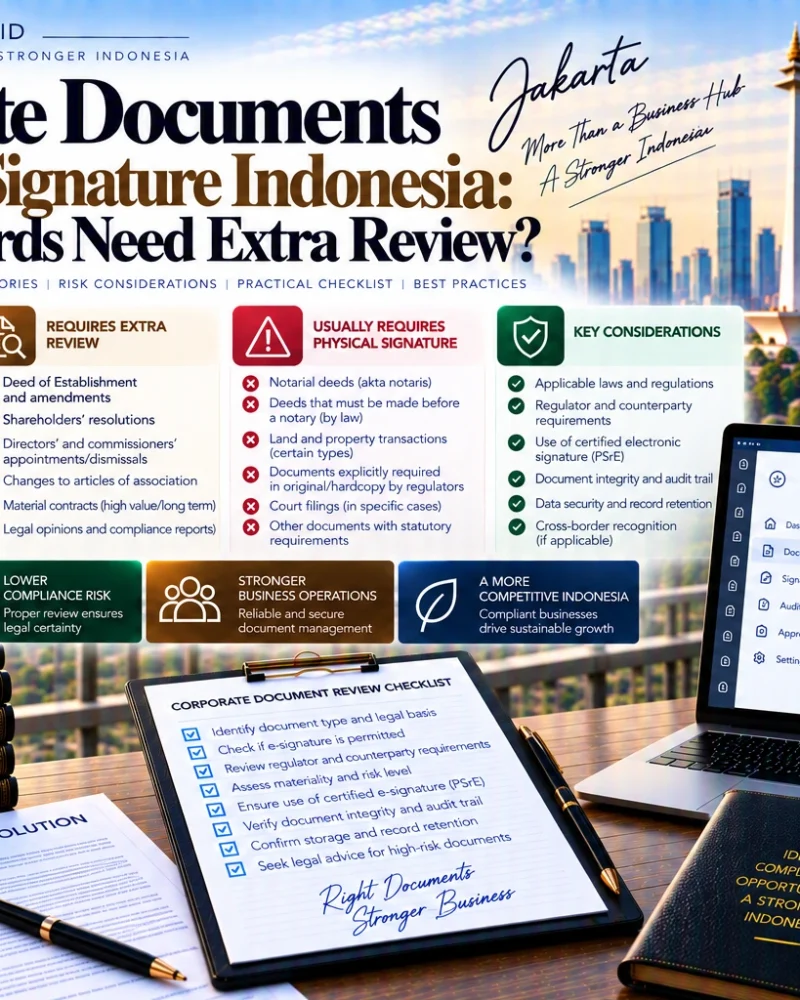 Notary Services
A company should not use one electronic-signature rule for every corporate document in Indonesia. Ordinary contracts, shareholder minutes, circular resolutions, powers of attorney, notarial deeds, and government filing documents can involve different form, authority, and evidentiary requirements. The baseline rule is Article 11 of the ITE Law, which gives an Electronic Signature legal force and […]
Read More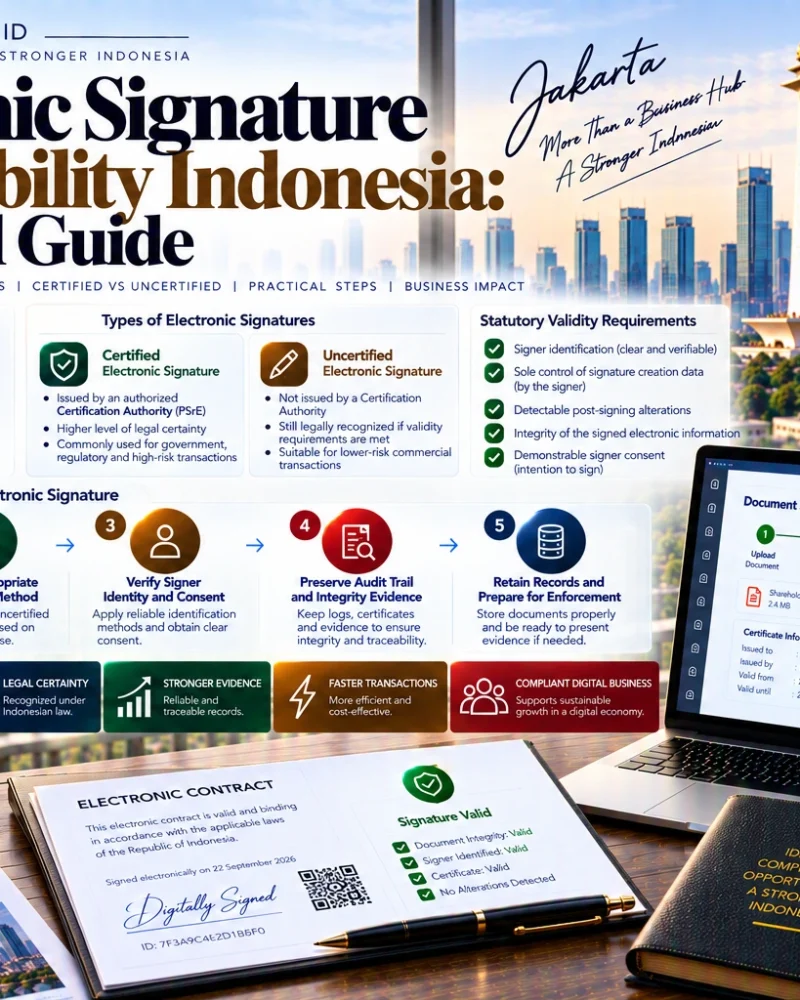 Notary Services
Electronic signatures can have legal force in Indonesia, but enforceability does not depend merely on placing a digital image of a signature onto a PDF. The central questions are whether the signing method can identify the signer, show that the signer controlled the signing process, detect later changes, preserve document integrity, and demonstrate the signer’s […]
Read More Notary Services
Once an Indonesian company’s new legal name has been approved, the remaining work is mostly about consistency. AHU, OSS, tax records, banks, contracts, invoices, licences, counterparties, websites, and internal systems should be reviewed so that documents used after the change no longer conflict with the company’s approved legal identity. The legal starting point is that […]
Read More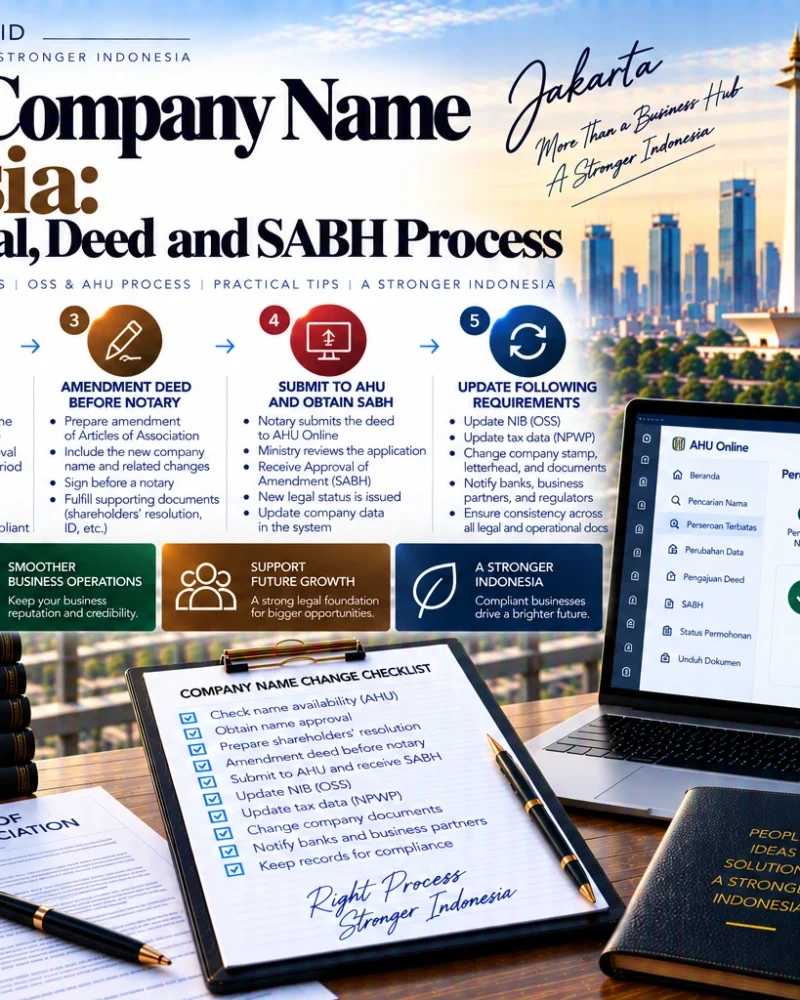 Notary Services
Changing an Indonesian company’s legal name is not simply a branding exercise. For a capital-based limited liability company, the replacement name must first satisfy the statutory naming rules, and the change then proceeds as an amendment to the articles of association requiring the appropriate shareholder, notarial, and ministerial steps. The specific company-name regulation, Government Regulation […]
Read More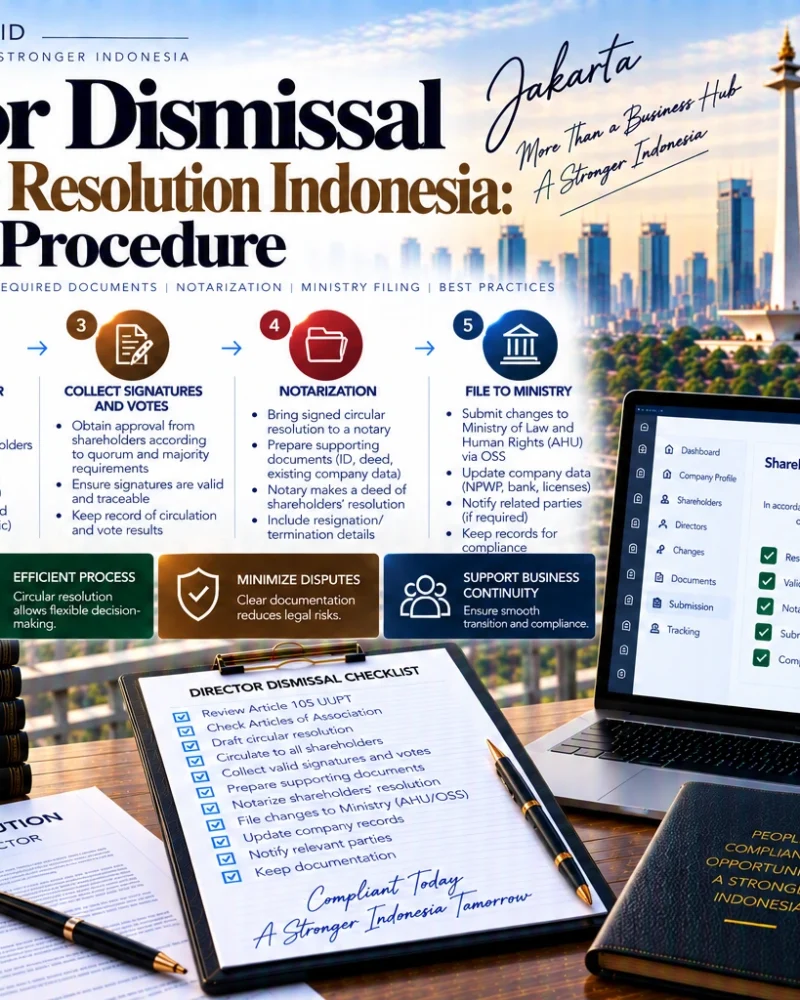 Notary Services
A director can be dismissed by circular shareholder resolution in Indonesia, but unanimous shareholder signatures alone are not enough. When the company uses an out-of-meeting decision, Article 105 adds a specific safeguard: the affected director must be told about the planned dismissal and given an opportunity to defend themselves before shareholders take the dismissal decision. […]
Read More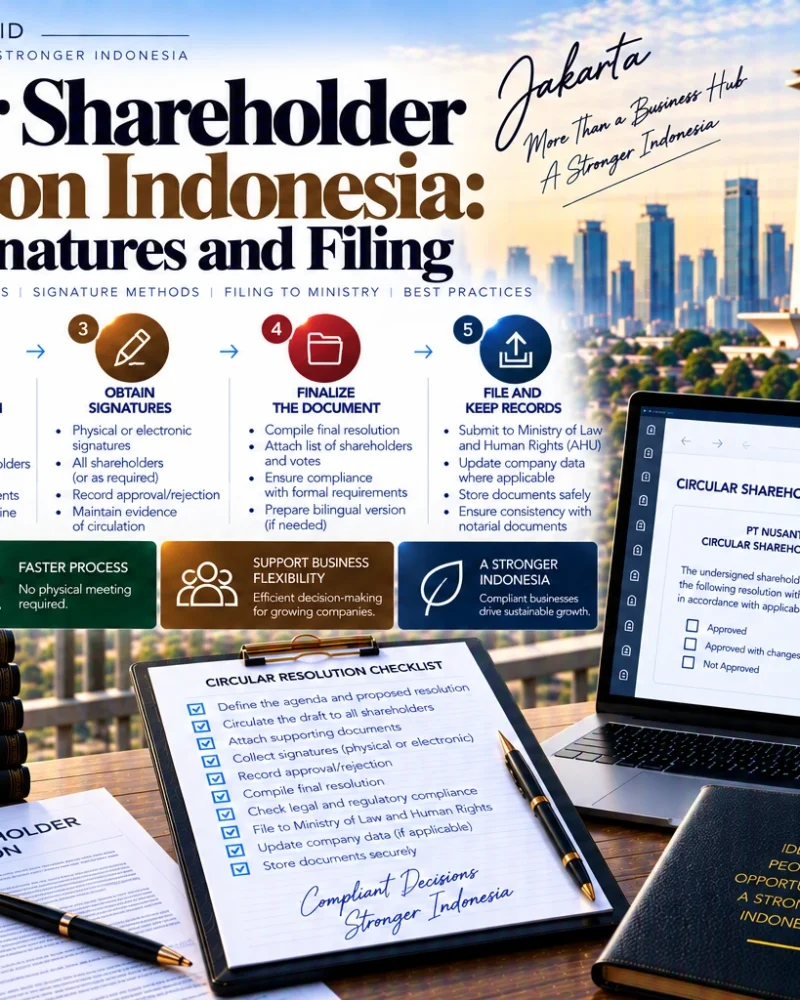 Notary Services
Indonesian shareholders do not always need to convene a physical General Meeting of Shareholders to adopt a binding corporate decision. A written decision outside the meeting can be valid, but the statutory threshold is strict: every shareholder with voting rights must approve the proposal in writing and sign it. Under Article 91 of Law No. […]
Read More Business Setup
For employers, RPTKA Indonesia should be planned before a foreign worker starts performing the intended role. The central task is to align the company, proposed position, duration, work location, foreign-worker qualifications and supporting documents with Indonesia’s current foreign-worker framework. The principal manpower framework is Government Regulation No. 34 of 2021 on the Utilization of Foreign […]
Read More Business Setup
The practical difference in business visa vs work permit Indonesia is the activity the foreign national will actually perform. A business visitor can attend meetings, negotiate and sign business agreements under an appropriate visitor category, while a person who will occupy a job and perform work for an Indonesian employer needs a work-oriented immigration and […]
Read More